
Future of AI in Hospitality Industry
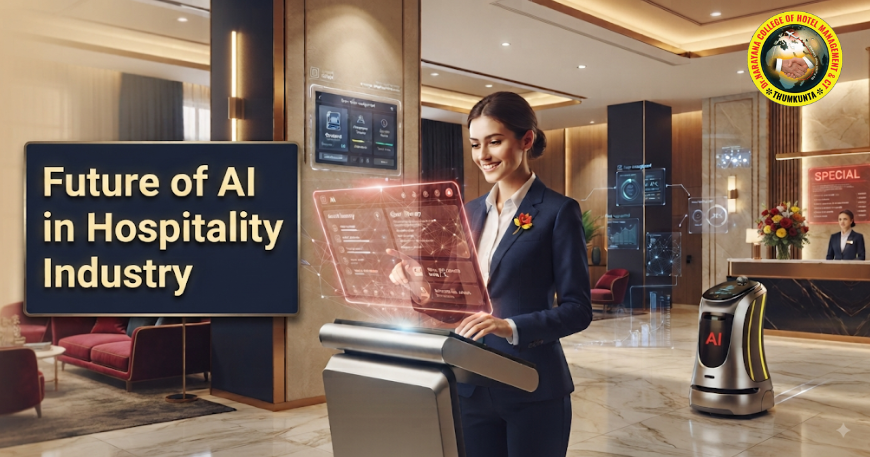
Hospitality has always been an industry built on anticipation-knowing what a guest needs before they ask for it. What’s changing now is how that anticipation happens. Increasingly, it’s not just experienced staff reading the room; it’s intelligent systems analyzing data in the background, quietly making hotel stays smoother, faster, and more tailored to each individual traveler. The Future of AI in Hospitality Industry is being written in real time, and hotels that understand this shift early will be the ones defining what great guest experience looks like a decade from now.
At Dr Narayana College, we spend a lot of time studying where hospitality technology is headed, not just where it stands today. Industrial Training in Hotel Management. This page breaks down the trends, technologies, and practical steps hotels should be thinking about as AI continues to reshape the industry from the ground up
Setting the Stage: Why This Shift is Happening
Guest expectations rarely stand still. A traveler who books a room today has likely just used a handful of AI-powered apps that morning-for navigation, recommendations, or customer service. Naturally, they expect a similar level of intuitive, frictionless service when they check into a hotel. This expectation gap is a major reason the Future of AI in Hospitality Industry is moving from experimental pilot programs into standard operating practice.
It’s not only about guest-facing convenience either. Hotels are under constant pressure to control costs, manage staffing efficiently, and compete in a crowded market where a single bad review can influence dozens of future bookings. AI offers a practical way to address all of these pressures simultaneously-provided it’s implemented thoughtfully. Properties looking to assess where they currently stand can start with our Hotel Technology Readiness Assessment, which evaluates existing systems against where the industry is heading.
Four Directions Defining the Future of AI in Hospitality
Deeply Personalized Guest Journeys
The days of one-size-fits-all guest communication are fading fast. Next-Generation Guest Personalization uses AI to build a genuine profile of each traveler-not just their name and loyalty tier, but their preferences, patterns, and even subtle cues from previous stays. A guest who always requests extra pillows or books a spa treatment on their second night will increasingly find these preferences anticipated automatically, without needing to ask each time.
This goes beyond convenience-it signals to guests that a property genuinely knows and values them, which is one of the strongest drivers of brand loyalty in an industry where switching hotels is effortless.
Conversational Interfaces Replacing Static Forms
Static booking forms, printed guest directories, and phone-based service requests are gradually being replaced by Conversational Guest Interfaces. Whether through in-room voice assistants, messaging-app chatbots, or app-based virtual concierges, guests are gaining the ability to simply ask for what they need in natural language and get an immediate, accurate response.
This shift matters for international travelers in particular, where language barriers have historically created friction. AI-powered translation and conversational tools are closing that gap, making hotels more accessible to a genuinely global guest base. Our Digital Guest Communication Solutions page covers how properties are rolling out these tools in phases.
Operations That Predict Rather Than React
Perhaps the most financially significant shift is the move from reactive to predictive operations. Predictive Hotel Operations use AI to forecast demand, flag maintenance issues before they cause downtime, and adjust staffing levels based on real-time occupancy trends rather than static schedules built weeks in advance.
This isn’t a small efficiency gain-it directly affects a hotel’s bottom line by reducing wasted labor hours, preventing costly equipment failures, and ensuring the right resources are available exactly when guests need them, not before or after.
Sustainability Powered by Smart Systems
As sustainability becomes a genuine booking criterion for many travelers, AI is playing a growing role in helping hotels reduce their environmental footprint without sacrificing guest comfort. AI-Driven Sustainability Management optimizes energy usage across HVAC, lighting, and water systems based on real occupancy patterns, cutting waste while maintaining consistent guest comfort levels.
Hotels that can demonstrate measurable sustainability improvements-backed by real data rather than vague claims-are increasingly able to market this as a genuine differentiator to eco-conscious travelers. To explore how sustainability and technology intersect for hospitality businesses, see our Sustainable Hotel Operations Guide.
The Practical Side: How Hotels Should Approach This Transition
Understanding where the industry is headed is only half the equation-hotels also need a realistic plan for getting there. A few principles consistently separate successful AI adopters from those who struggle:
- Data Quality Comes First: No AI system can personalize effectively without clean, well-organized guest data. This foundational work often gets overlooked in the rush toward flashy features.
- Staff Buy-In Matters: Technology adopted without staff understanding or support tends to underperform. Training and clear communication about how AI supports (rather than threatens) staff roles is essential.
- Guest Trust Must Be Protected: As AI systems collect more personal data, transparent privacy practices aren’t optional-they’re a core part of maintaining guest confidence.
- Phased Rollouts Outperform Overhauls: Hotels that pilot AI in one focused area-guest messaging, revenue management, or maintenance forecasting-before expanding tend to see stronger, more sustainable results than those attempting a complete system overhaul at once.
Will AI Replace the Human Element in Hospitality?
This is one of the most common concerns raised whenever the Future of AI in Hospitality Industry comes up, and it’s worth addressing directly. The honest answer is no-and the data from early adopters actually supports the opposite conclusion. Hotels that implement AI thoughtfully tend to see staff spending less time on repetitive administrative tasks and more time on genuine guest interaction, problem-solving, and the kind of warm, personal service that no algorithm can replicate.
The most successful properties treat AI as a tool that removes friction, not a replacement for the people who make hospitality feel personal. A well-designed check-in kiosk doesn’t eliminate the need for a friendly staff member-it frees that staff member to spend more time actually engaging with guests instead of processing paperwork.
Looking Further Ahead
Beyond the trends already taking shape, the next horizon for the Future of AI in Hospitality Industry includes possibilities like augmented reality room previews before booking, fully integrated smart room ecosystems that adjust automatically to guest preferences the moment they enter, and increasingly sophisticated demand forecasting that accounts for global travel patterns in real time.
Hotels that build strong AI foundations now-clean data systems, trained staff, and a clear technology roadmap-will be far better positioned to adopt these advances as they mature, rather than scrambling to catch up once competitors have already moved ahead.
Plan Your Hotel's Next Move With Dr Narayana
The Future of AI in Hospitality Industry isn’t a distant concept-it’s actively taking shape in the choices hotels make today. At Dr Narayana College, we help hospitality businesses build practical, phased technology roadmaps that align with their guest expectations, operational realities, and long-term growth goals.
Conclusion
Contact Us Dr Narayana College today to talk through where your property currently stands and what a realistic path toward smarter, AI-enhanced hospitality could look like. Let’s help you stay ahead of the curve, with Dr Narayana College as your guide.
FAQs
The Future of AI in Hospitality Industry Explained shows hotels using smart systems to automate service and personalize guest stays.
No, the Future of AI in Hospitality Industry Explained reveals technology enhances staff roles rather than replacing human hospitality.
The Future of AI in Hospitality Industry Explained highlights data literacy and tech comfort as essential graduate skills.
The Future of AI in Hospitality Industry Explained covers predictive tools that anticipate guest needs before they're asked.
Yes, the Future of AI in Hospitality Industry Explained notes AI now optimizes energy and water use across properties.
Keywords
- AI-Driven Hospitality Trends
- Predictive Guest Personalization
- Conversational AI in Hotels
- Smart Hotel Technology
- AI-Enhanced Guest Experience
- Predictive Hotel Operations
- Robotics in Hospitality
- AI Sustainability in Hotels
- Voice-Activated Hotel Assistants
- Next-Gen Hospitality Technology
Recent Posts
-
How AI Is Shaping Tourism and Hospitality Education in Hyderabad
-
How AI Is Changing Hotel Management Education
-
Which Course is Better for Hotel Management?
-
Top 5 Hotel Management Colleges in Hyderabad
-
Life of a Hotel Management Student
-
Hospitality Jobs on Cruise Ships
-
How to Get Campus Placement in Hotel Management