Master’s in Hotel Management: Eligibility, Career Scope & Benefits
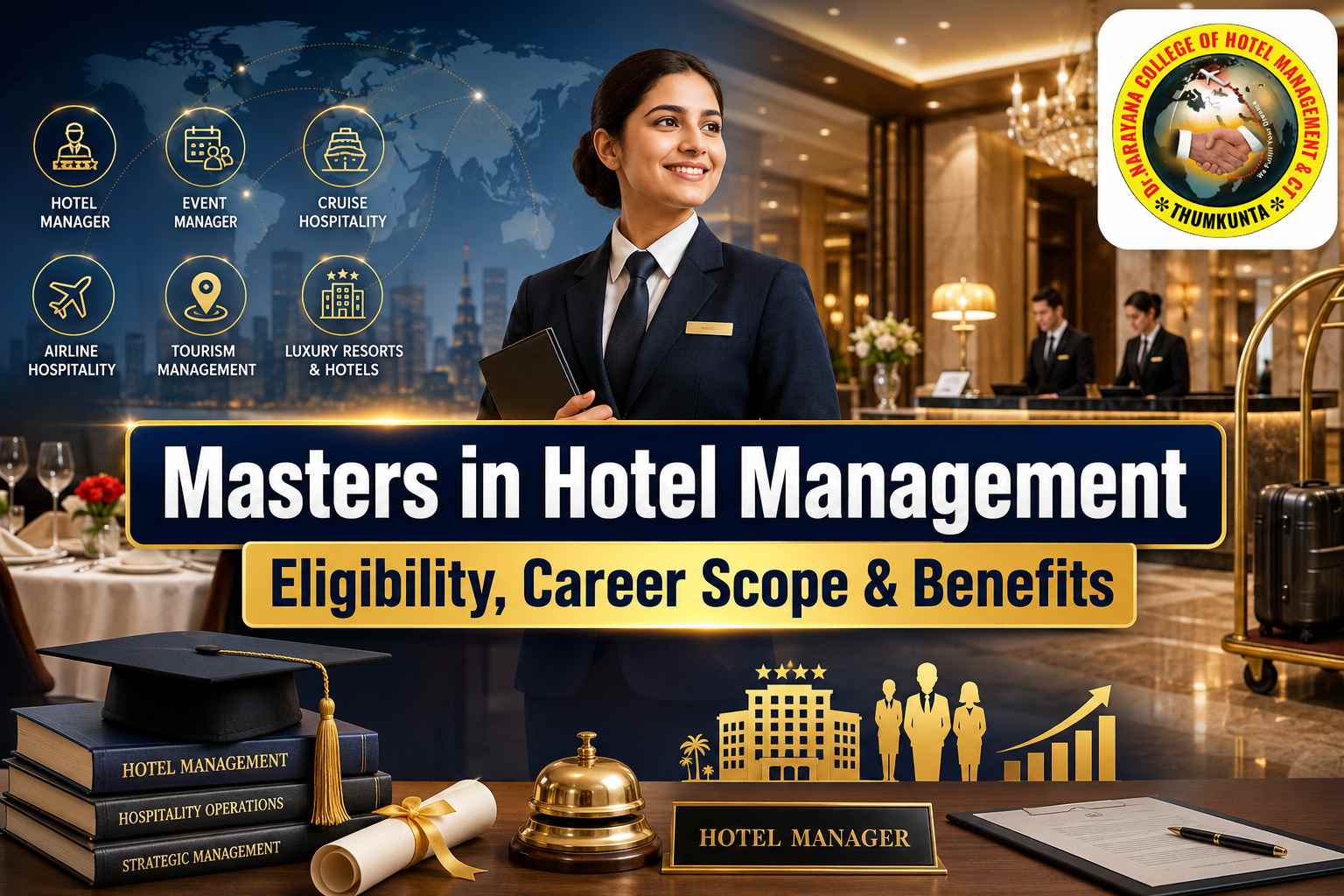
Imagine leading a luxury hotel, managing world-class resorts, organizing international events, or shaping unforgettable guest experiences across the globe. The hospitality industry offers endless possibilities for individuals who are passionate about service, leadership, and innovation. A Master’s in Hotel Management is the perfect gateway for aspiring professionals who want to transform their passion into a successful and rewarding career.
As the hospitality and tourism sectors continue to expand, businesses are looking for skilled managers who can deliver exceptional customer experiences while driving operational excellence. A Master’s in Hotel Management equips students with the advanced knowledge, strategic thinking, and leadership skills required to excel in today’s competitive hospitality landscape. From hotel operations and revenue management to hospitality marketing and business strategy, this postgraduate program prepares students to take on influential roles within the industry. At DRNCHM, students are empowered to become future hospitality leaders through a combination of academic excellence and practical learning.
What is a Master's in Hotel Management?
A Master’s in Hotel Management is a postgraduate program that focuses on advanced hospitality management principles, strategic planning, customer relationship management, hotel operations, tourism management, and leadership skills. The program equips students with the knowledge and practical expertise required to manage hotels, resorts, restaurants, cruise lines, and other hospitality businesses effectively.
The course combines theoretical concepts with practical industry exposure, enabling graduates to understand the dynamic nature of the hospitality industry and adapt to evolving market trends.
Eligibility for the Master's in Hotel Management
Students interested in pursuing a Master’s in Hotel Management must meet specific eligibility requirements. While criteria may vary across institutions, the common requirements include:
Educational Qualification
- A bachelor’s degree from a recognized university.
- Candidates with a Bachelor’s in Hotel Management & Catering Technology are often preferred due to their foundational knowledge of hospitality operations.
- Graduates from tourism, hospitality, business administration, and related disciplines may also be eligible.
Minimum Academic Performance
- Most institutions require candidates to achieve a minimum percentage or CGPA in their undergraduate studies.
- Admission requirements may differ depending on the institution.
Entrance Examinations
- Some universities may conduct entrance tests or personal interviews.
- Candidates may need to demonstrate communication skills, hospitality awareness, and managerial aptitude.
At DRNCHM, students are guided through the admission process and provided with expert counseling to choose the right hospitality career path.
Why Pursue a Master's in Hotel Management?
A Master’s in Hotel Management offers several advantages that can significantly enhance a student’s career prospects.
Advanced Industry Knowledge
The program provides an in-depth understanding of hospitality management, including:
- Hotel operations management
- Food and beverage management
- Hospitality marketing
- Revenue management
- Tourism planning
- Event management
- Human resource management
Leadership Development
Hospitality management seeks professionals capable of leading teams and managing complex operations. A Master’s in Hotel Management helps students develop leadership, problem-solving, and decision-making skills necessary for senior management roles.
Better Career Opportunities
Graduates can access a wider range of job opportunities and higher-paying positions compared to those with only undergraduate qualifications.
Global Career Exposure
The hospitality industry is international in nature. A master’s degree enables students to explore opportunities in luxury hotels, international resorts, cruise lines, airlines, and tourism organizations worldwide.
Career Scope After a Master's in Hotel Management
The demand for qualified hospitality professionals continues to grow. Completing a Master’s in Hotel Management can open doors to diverse career opportunities across various sectors.
Hotel Manager
Hotel managers oversee daily operations, guest services, staff management, and financial performance to ensure exceptional guest experiences.
Hospitality Consultant
Consultants provide strategic guidance to hotels and hospitality businesses seeking to improve operational efficiency and profitability.
Food and Beverage Manager
Professionals manage restaurant operations, menu planning, inventory control, and customer satisfaction initiatives.
Event Manager
Event managers coordinate conferences, weddings, corporate events, and large-scale hospitality functions.
Tourism Manager
Tourism managers develop travel experiences, manage tourism projects, and contribute to destination marketing strategies.
Resort Operations Manager
Resort managers supervise accommodation, recreational facilities, guest services, and overall resort performance.
Students who have completed a Bachelor’s in Hotel Management & Catering Technology and later pursue a master’s degree often find themselves better positioned for managerial and executive-level roles.
Benefits of Studying at DRNCHM
Choosing the right institution plays a crucial role in career success. DRNCHM has established itself as a trusted name in hospitality education by providing industry-oriented learning experiences.
Industry-Relevant Curriculum
DRNCHM focuses on delivering a curriculum aligned with current hospitality industry requirements and trends.
Practical Training
Students gain hands-on experience through internships, workshops, industrial visits, and real-world hospitality exposure.
Experienced Faculty
The faculty at DRNCHM consists of experienced professionals who bring valuable industry insights into the classroom.
Placement Support
DRNCHM assists students in securing employment opportunities with reputed hospitality organizations, helping them build successful careers.
Career Advancement Opportunities
Students graduating from DRNCHM are equipped with the knowledge, confidence, and professional skills required to excel in the competitive hospitality industry.
Conclusion
Ready to explore the Master’s in Hotel Management: Eligibility, Career Scope & Benefits in detail?
Connect with DRNCHM today to learn more about admissions, eligibility requirements, and career opportunities. Our expert counselors are here to guide you toward the right academic and professional path in the dynamic world of hospitality.
FAQs
Masters in Hotel Management: Eligibility, Career Scope & Benefits refers to understanding the admission requirements, career opportunities, and advantages of pursuing a postgraduate degree in hotel management.
For a Master's in Hotel Management: Eligibility, Career Scope & Benefits, candidates typically need a bachelor's degree, especially a Bachelor's in Hotel Management & Catering Technology qualification.
The Master's in Hotel Management: Eligibility, Career Scope & Benefits guide highlights careers such as Hotel Manager, Resort Manager, Event Manager, Hospitality Consultant, and Tourism Manager.
The benefits explained in the Master's in Hotel Management: Eligibility, Career Scope & Benefits include enhanced leadership skills, higher salary potential, global career opportunities, and industry expertise.
DRNCHM helps students understand the Master's in Hotel Management: Eligibility, Career Scope & Benefits through industry-focused education, practical training, and strong placement support.
Keywords
- Masters in Hotel Management: Eligibility, Career Scope & Benefits
- Master's in Hotel Management eligibility
- Master's in Hotel Management career scope
- Benefits of a Master's in Hotel Management
- Master's in Hotel Management admissions
- Master's in Hotel Management jobs
- Master's in Hotel Management salary
- Career after a Master's in Hotel Management
- Hotel Management postgraduate course
- Hospitality Management career opportunities Hospitality Management career opportunities
Recent Posts
-
How AI Is Shaping Tourism and Hospitality Education in Hyderabad
-
How AI Is Changing Hotel Management Education
-
Which Course is Better for Hotel Management?
-
Top 5 Hotel Management Colleges in Hyderabad
-
Life of a Hotel Management Student
-
Hospitality Jobs on Cruise Ships
-
How to Get Campus Placement in Hotel Management