How AI Is Changing Hotel Management Education
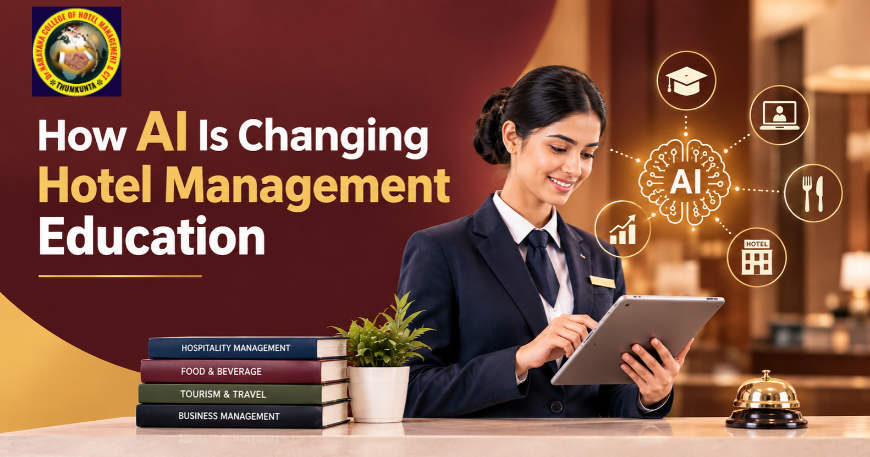
Walk into any hotel today, and you’re already meeting AI without noticing it. It’s in the room rate you were quoted, the WhatsApp reply that confirmed your booking, and the app that told housekeeping your room was ready. So it’s natural for students to wonder what this means for them. Will machines take over? Is hotel management still worth studying? These are fair questions, and they deserve honest answers.
The team at Dr. Narayana Degree College of Hotel Management breaks down how AI is changing hotel management education in simple, everyday terms. We’ll look at what’s actually changing in how students learn, which skills matter more than ever, and why the warmth and judgement of a real person still sit at the heart of hospitality. No hype and no jargon, just a clear picture to help you plan your career with confidence.
What is the Role of AI in Hotel Management Education?
Forget robots walking around with room keys. Real hotel AI is much more boring than that, and much more useful. It’s the software that works out room rates for next weekend. It’s the chatbot that tells a guest the pool closes at 9. It’s the system that warns maintenance a lift is acting up before it actually breaks down. Mostly, it’s very good at one thing: quickly sifting through huge amounts of data and spotting patterns people would miss.
Now, why should a student care? Because the first week of an internship is tough enough already. New uniform, new people, a new manager watching your every move. If the front desk software is also completely new to you, that’s one more thing to sweat about. A lot of how AI is changing hotel management education comes down to something simple: you get to meet these tools in college, before the pressure is on.
How AI is Transforming the Way Hotel Management Students Learn
Let’s be clear about one thing first. Hotel management is, and always will be, a hands-on course. Nobody learns knife skills from an app. You learn by chopping a hundred onions, crying a little, and slowly getting faster.
What’s changing is everything around the practical work. Say you keep forgetting the sequence of service for a formal dinner. A learning app can catch that and keep quizzing you until it sticks. Missed the lecture on room types? Watch it again at night. Nervous about handling complaints? Practise with a scenario first, where the “angry guest” is just text on a screen. Your teachers are still at the heart of it. AI just stretches your practice time beyond the classroom.
5 Ways AI Is Changing How Students Learn Hospitality
1. Learning That Adjusts to You
In every class, someone gets front office procedures in two days, and someone else needs two weeks. Both are normal. Smart learning tools notice where you’re struggling and give you more practice right there, instead of pushing everyone along at the same speed. There’s a nice side effect too. You get used to spotting your own gaps, which is exactly what good hotel staff do on the job.
2. Seeing How Hotels Run Behind the Scenes
Ever wondered how a big hotel knows which room is clean, which is occupied and which guest is checking out late? That’s the property management system. Newer ones use AI to assign rooms, predict check-outs and alert housekeeping automatically. Once you understand this chain, a lot of things click. You suddenly see why one wrong entry at reception can leave a guest stuck in the lobby, getting angrier by the minute.
3. Simulations: Mess Up Now, Not Later
This one’s fun. In a simulation, you can run a pretend hotel, set your own prices, decide how many staff to schedule, and see what happens. Overprice the rooms and occupancy drops. Cut too many staff and the reviews tank. Or you face a virtual guest who’s upset about a dirty bathroom, and you have to sort it out. It’s a safe place to get things wrong, and that beats learning the same lesson in front of a real guest during peak wedding season.
4. Chatbots Handle the Easy Stuff. You Handle the Rest.
Lots of hotels now answer WhatsApp and website queries with chatbots. “Is breakfast included?” “What’s the check-out time?” Bots are great at that. They’re not so great at “My father just had surgery, can we get a ground-floor room?” That message needs a person who actually listens. Students who understand where the bot stops and the human takes over become really valuable at the front desk.
5. Numbers, With a Human Brain Attached
Revenue management is basically selling the right room, at the right price, at the right time. AI tools help by looking at past bookings, local events and what nearby hotels are charging. Say a huge tech conference is coming to Hyderabad. The system may push you to raise rates early. Smart. But someone still has to ask: will our regular corporate guests be upset? Is this fair? That’s where you come in.
Benefits of AI in Hospitality Education
When you’ve already used hotel management technology in college, your internship feels a lot less scary. You’ve seen the screens. You know the terms. You can focus on the guest instead of fighting the software. You also get far more practice than any timetable can give you. And you start to understand smart hotel operations, where automation takes the boring, repetitive jobs off staff so they have more time for guests. Since hospitality industry trends keep changing, getting comfortable with new tools early is a big plus.
But we’d be lying if we said it’s all positive. Some AI tools are expensive. Data can be wrong. And if you spend more time on a screen than in the kitchen or the training restaurant, it’ll show on your first day at work. No app can teach you how to calm a crying child at check-in. Use technology to support your training, never to replace it.
Essential Skills Hotel Management Students Need in the AI Era
Software keeps changing. Every few years, hotels switch systems. What doesn’t change is the kind of person they want to hire.
They want someone who’s comfortable with technology and doesn’t freeze when a new screen pops up. Someone who communicates well in person, on the phone and in writing. Someone who solves problems and thinks critically, enough to say “wait, this rate looks wrong” when the system makes a silly suggestion.
They also want people who adapt quickly, work well in a team (because guests don’t care which department messed up), and genuinely enjoy serving others. And there’s one newer skill: using AI responsibly. That means keeping guest data private, double-checking what a tool tells you, and knowing when a decision needs a human.
Career Opportunities for Hotel Management Students in the AI Era
Here’s the good news. Knowing your way around technology helps almost everywhere in a hotel, and you don’t need to be a tech genius to do it.
Front office teams use check-in and PMS software. Guest relations handles online reviews and messages. Reservations works with booking engines all day long. Revenue managers practically live inside pricing tools. Even the kitchen and housekeeping now use apps for inventory and daily tasks.
What all these jobs really need is someone comfortable with tools and great with guests. Can anyone promise you a job? No, and be careful of anyone who does. It depends on your effort, your skills and what the industry needs at the time. But we’re pretty sure the future of hotel management belongs to people who can do both.
How Hotel Management Colleges Can Prepare Students for the Future
Here’s what it shouldn’t be: a hotel course that slowly turns into a computer course.
Good AI in hospitality education keeps the basics front and centre: food production, F&B service, front office and housekeeping. Then it adds practical training and real industry exposure, because confidence only comes from doing the actual work. Digital awareness and soft skills tie it all together.
It’s a bit like a good hotel, really. Technology quietly working in the background, and people doing the important stuff up front.
Why Choose Dr. Narayana Degree College of Hotel Management?
Picking a college is a big deal, so please don’t decide based on an Instagram ad alone (even ours). Look at how each programme balances classroom learning, hands-on practice and professional skill development. At Dr. Narayana Degree College of Hotel Management, we focus on strong hospitality basics along with the communication and teamwork skills the industry looks for. The best thing you can do? Visit. Walk around the campus, talk to the faculty, and ask all your questions, even the awkward ones.
Conclusion
Get in Touch: Want to know more about our hotel management courses or the admission process? We’re happy to help.
FAQs
No. How AI is changing hotel management education is about using smart tools, not building them.
Not really. How AI is changing hotel management education shows that guests still need people.
Communication and digital basics. How AI is changing hotel management education makes both equally important.
Yes. How AI is changing hotel management education proves the industry still runs on human service.
For pricing, bookings and chatbots. Learning these tools is part of how AI is changing hotel management education.
Keywords
- AI in hospitality education
- Artificial intelligence in hotel management
- AI in hotel industry
- Hotel management technology
- Future of hotel management
- Smart hotel operations
- Hospitality industry trends
- Hotel management careers in the AI era
- Skills for hotel management students
- Hotel management college in Hyderabad
Recent Posts
-
How AI Is Shaping Tourism and Hospitality Education in Hyderabad
-
How AI Is Changing Hotel Management Education
-
Which Course is Better for Hotel Management?
-
Top 5 Hotel Management Colleges in Hyderabad
-
Life of a Hotel Management Student
-
Hospitality Jobs on Cruise Ships
-
How to Get Campus Placement in Hotel Management