Hotel Management Career Growth Roadmap
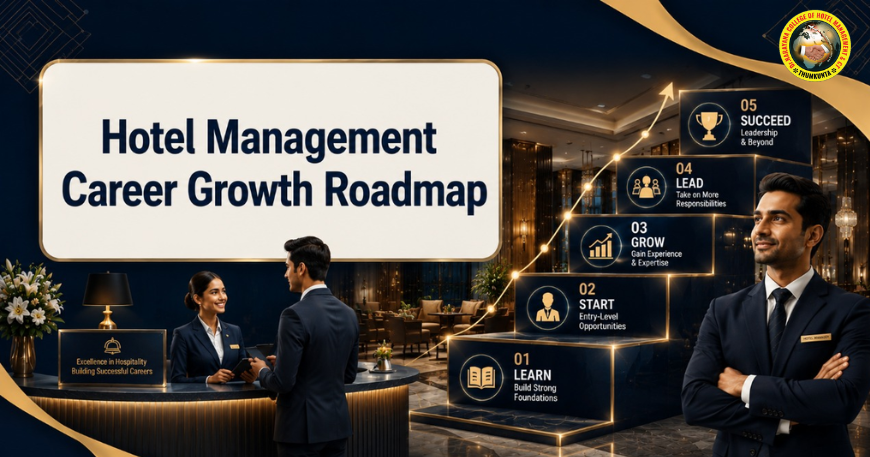
Choosing a career in hospitality is exciting, but knowing what actually comes next after graduation can feel unclear. Which role should you target first? How long before you’re managing a department? What does it really take to become a General Manager? A clear Hotel Management Career Growth Roadmap answers all of these questions, giving you a practical framework to plan your next five, ten, or fifteen years in the industry.
At Dr. Narayana College, career planning is built directly into how we educate our students. Rather than treating hospitality Ai education as a one-time qualification, we frame it as the starting point of a long-term professional journey. This guide walks through that journey step by step, so you know exactly where you stand and what to aim for next.
Why a Career Roadmap Matters in Hospitality
Hospitality is a people-first, performance-driven industry, and unlike many corporate careers, promotions here are earned through demonstrated operational excellence rather than tenure alone. That’s precisely why having a roadmap matters – it helps you identify the specific skills, certifications, and experiences that move you from one level to the next, instead of hoping growth happens automatically.
A well-defined career growth roadmap in hotel management also helps students choose the right specialization early. Some professionals thrive in guest-facing roles like front office and guest relations, while others find their strength in food and beverage operations, sales, or revenue management. Recognizing your natural strengths early – ideally during your academic training – puts you on a faster, more focused growth path. Our hotel management courses are structured to expose students to every core department before they specialize, so career choices are informed rather than accidental.
The Learning and Exposure Phase
The first phase of any hospitality career revolves around exposure – understanding how a hotel actually runs from the inside. This typically happens during academic training and internships, well before a formal job title enters the picture. Students rotate through front office, housekeeping, kitchen operations, and food and beverage service, building a working knowledge of how each department contributes to the guest experience.
This phase is arguably the most important, because the habits, discipline, and service mindset developed here shape everything that follows. Employers consistently favor candidates who’ve had substantial, well-supervised exposure to live hotel environments over those with classroom knowledge alone. That’s why Dr. Narayana College places such strong emphasis on our structured internship placements management companies. which give students real operational responsibility under the guidance of experienced hospitality professionals – not just observational shadowing.
The Execution Phase - First Two to Five Years
Once formal education wraps up, the roadmap shifts into what we call the execution phase. Graduates typically step into roles like Guest Service Executive, Front Office Associate, or Food and Beverage Trainee, where the focus is on applying what they’ve learned under real guest-facing pressure. Performance here is judged on consistency, attention to detail, and the ability to handle unpredictable situations calmly.
Within two to three years, high performers usually move into supervisory positions – Duty Manager, Shift Leader, or Assistant Department Manager – taking on responsibility for small teams and daily operational decisions. This is also when professionals start to notice which department genuinely excites them, which is a strong signal for where to specialize next.
What Accelerates Growth in This Phase
- Volunteering for cross-departmental projects to build broader operational understanding
- Actively seeking feedback from senior managers rather than waiting for annual reviews
- Building strong guest-relationship instincts, which directly influence service scores
- Staying current with hotel technology, from property management systems to guest feedback platforms
The Specialization and Management Phase
Somewhere between years five and ten, hospitality professionals typically move into specialized management roles – Front Office Manager, F&B Manager, Sales Manager, or Revenue Manager. This is where the roadmap becomes less linear and more strategic, because professionals now have real choices about the direction of their career.
Some choose to deepen their expertise within a single department, becoming the go-to specialist for revenue optimization or guest experience design. Others pursue broader operational roles that oversee multiple departments simultaneously, positioning themselves for general management down the line. Both paths are valid, and the right choice depends on individual strengths and long-term ambitions.
This phase also tends to be when professionals invest in additional certifications – in areas like hospitality finance, digital revenue management, or people leadership – to sharpen their profile for senior roles. Building a strong professional network within the industry becomes equally important here, as many senior opportunities are filled through referrals and internal recommendations rather than open postings.
Phase 1: Senior Leadership and General Management
The final phase of the hotel management career growth roadmap is senior leadership – roles like Resident Manager, Director of Operations, and eventually General Manager. Reaching this level generally takes twelve to fifteen years of consistent, progressive experience, combined with strong financial acumen, strategic thinking, and proven leadership ability.
General Managers oversee the complete performance of a property, balancing guest satisfaction, staff culture, brand standards, and profitability all at once. It’s a role that draws on everything learned across earlier phases – operational discipline from the early years, specialized expertise from the middle years, and the people-leadership skills developed along the way.
Interestingly, the path to General Manager rarely stays within a single hotel or even a single brand. Many senior leaders build their careers by moving across different property types – resorts, business hotels, boutique properties – and sometimes across countries, with each transition adding a new layer of adaptability and strategic insight to their leadership style.
Start Your Journey with Dr. Narayana College
A career in hospitality rewards those who plan intentionally rather than drift from one role to the next. The Hotel Management Career Growth Roadmap gives you that structure – a clear sense of what to focus on today so you’re ready for what comes next, whether that’s your first supervisory role or eventually leading a property as General Manager.
Conclusion
At Dr. Narayana College, our programs are built around this exact philosophy, combining strong academic foundations with real industry exposure and dedicated placement guidance to set students up for long-term success in hospitality.
Contact Dr. Narayana College today to speak with our admissions team and discover how to help you build a hospitality career with a clear roadmap from day one.
FAQs
The hotel management career growth roadmap moves through entry-level, supervisory, mid-level, and senior leadership stages.
Per the hotel management career growth roadmap, reaching GM typically takes 12–15 years of experience.
Guest service, finance, and leadership drive the hotel management career growth roadmap at every stage.
Yes, internships are foundational to the hotel management career growth roadmap and build key skills.
Yes, the hotel management career growth roadmap allows lateral moves before settling into a specialty
Keywords
- Entry level hotel management jobs
- Hotel management degree career options
- Skills for hotel management career
- Hotel management certifications
- Front office to GM career path
- Hotel manager salary by experience
- Hospitality management career guide
- How to become a hotel manager
- Career growth in hospitality
- Hotel management job hierarchy
Recent Posts
-
How AI Is Shaping Tourism and Hospitality Education in Hyderabad
-
How AI Is Changing Hotel Management Education
-
Which Course is Better for Hotel Management?
-
Top 5 Hotel Management Colleges in Hyderabad
-
Life of a Hotel Management Student
-
Hospitality Jobs on Cruise Ships
-
How to Get Campus Placement in Hotel Management