Which Course is Better for Hotel Management?
Do you dream of managing a luxury hotel, becoming a professional chef, working in the tourism industry, or building a career in hospitality? If so, choosing the right course is the first step toward turning your ambition into reality. One question many students ask after completing their schooling is, “Which course is better for hotel management?” With different degree programs, diplomas, and tourism-related courses available, deciding which path suits you best can feel confusing.
At Dr. Narayana College of Hotel Management, students can explore educational options related to hotel management, catering technology, tourism, and hospitality. Understanding these programs can help you make a more informed decision about your future.
Best Hotel Management Courses to Choose After 10th or 12th
Your current educational qualification plays an important role when selecting a hotel management course. After Class 10, students can explore intermediate education and eligible diploma programs that introduce them to hospitality or prepare them for further studies. After Class 12, students can consider undergraduate hotel management degrees, diplomas, or tourism and hospitality programs, depending on the eligibility requirements.
If you want a broader academic foundation, a bachelor’s degree may be suitable. If you prefer a shorter program focused on specific hospitality skills, a diploma may be worth exploring. Students interested in travel, tourism, and guest experiences can also consider tourism and hospitality management.
Top Hotel Management Courses to Build Your Career
1. Bachelor’s in Hotel Management and Catering Technology
If you want to understand how hotels and catering businesses operate, a bachelor’s degree in hotel management and catering technology is an option worth considering.
This undergraduate pathway provides a broader introduction to hospitality operations and management. Depending on the curriculum, students may study food production, restaurant services, front office operations, housekeeping, guest relations, and hospitality administration.
Why consider this course?
A bachelor’s degree may suit students who want a structured undergraduate qualification and a foundation for long-term career development in the hospitality sector. After completing a relevant qualification, students can explore roles in hotel operations, food and beverage service, front office departments, catering, and other hospitality functions.
2. Diploma in Hotel Management
Would you prefer a shorter course that introduces you to essential hotel operations? A diploma in hotel management may be a suitable option.
Diploma programs generally focus on selected hospitality skills and operational knowledge. Depending on the syllabus, subjects may include food preparation, restaurant service, front office procedures, housekeeping, and guest communication.
Who should choose a diploma?
This option may appeal to students who want focused training within a shorter period or wish to develop foundational skills before pursuing further education. Dr. Narayana College lists a six-month Diploma in Hotel Management with AI.
3. Tourism and Hospitality Management
Do you enjoy travelling, meeting people, and learning about different destinations? Tourism and hospitality management could be an interesting pathway for you. This field combines hospitality services with tourism-related knowledge. Depending on the program, students may learn about accommodation operations, customer experiences, tourism services, professional communication, and the use of digital technologies in hospitality.
What makes this course interesting?
It can provide a foundation for exploring tourism businesses, travel services, hotel operations, and other customer-focused industries. Students who enjoy organising experiences and interacting with people may find this field appealing.
Hotel Management Degree vs Diploma: Which Should You Select?
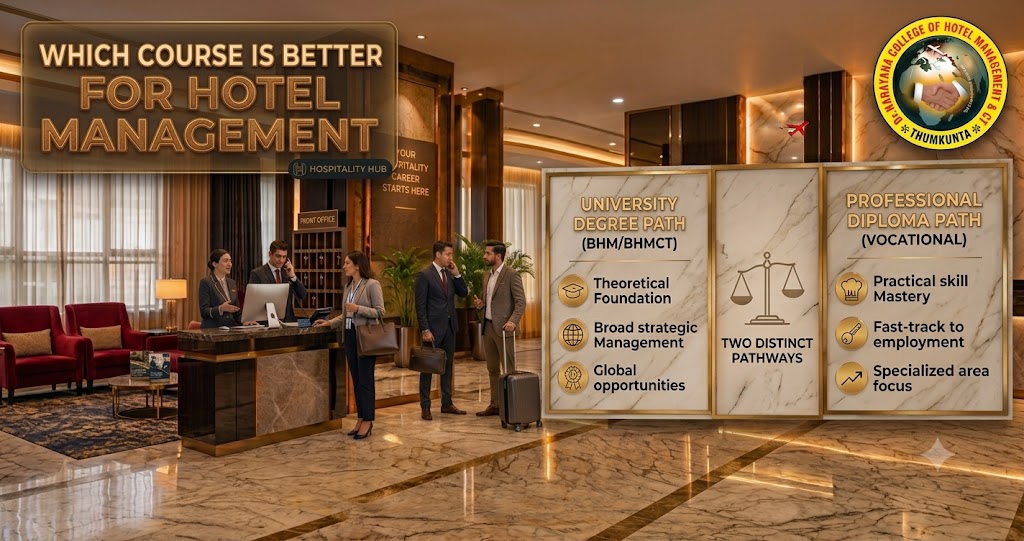
Choosing between a degree and a diploma depends on how much time you want to invest in your education and the type of qualification you need for your career plans. A bachelor’s degree typically provides a broader academic foundation and may be appropriate for students planning a long-term career in hospitality. A diploma generally offers a shorter route to learning selected hospitality concepts and practical skills, although course content and recognition vary between institutions.
For students aiming to develop their knowledge across several hotel departments, a degree may be worth considering. Those looking for a shorter learning pathway can investigate diploma programs and check which opportunities the qualification supports.
Neither option automatically guarantees employment or career advancement. Practical ability, communication, work experience, additional training, and the requirements of individual employers also matter.
Essential Skills for a Successful Hotel Management Career
A hospitality qualification is only one part of becoming a successful professional. Developing the right workplace skills can help you prepare for the demands of the industry.
Communication and interpersonal skills: Hospitality professionals interact with guests and colleagues every day. Clear communication helps create positive service experiences and effective teamwork.
Customer service: Understanding customer needs, responding politely, and handling concerns professionally are important in hotel and restaurant environments.
Teamwork and coordination: Hotels operate through several departments, including reception, housekeeping, food production, and food service. Coordinating with others helps maintain smooth operations.
Time management: Hospitality professionals often work with service schedules, guest requests, and operational deadlines. Organising tasks efficiently is therefore essential.
Problem-solving: Handling unexpected situations calmly can help professionals respond to guest concerns and operational challenges.
Technology awareness: Digital booking platforms, hotel management systems, and AI-supported tools are increasingly relevant to hospitality operations. Learning about these technologies can help students understand modern workplace practices.
What Career Opportunities Can You Explore After Hotel Management?
One of the advantages of studying hotel management is the variety of sectors in which hospitality skills can be applied. Depending on your qualification and experience, you may explore opportunities in hotel operations, front office services, restaurant management, food production, housekeeping, catering, and guest relations.
Tourism-related qualifications may also provide a foundation for exploring travel services, tourism operations, and visitor experiences. Students interested in culinary work can develop their skills in food preparation and professional kitchen operations, subject to the training and qualifications required for particular roles.
With additional experience and professional development, some individuals progress into supervisory or management positions. Others may eventually explore entrepreneurship in catering, food services, or related hospitality businesses. Career opportunities vary by employer, location, qualification, and experience. Students should investigate job requirements and seek practical experience wherever possible.
Why Explore Dr. Narayana College of Hotel Management?
Choosing a college is an important decision that can influence your learning experience and professional preparation. Students comparing hotel management institutions should evaluate course options, curriculum, practical facilities, recognition, and student support. Dr. Narayana College of Hotel Management lists programs in hotel management and catering technology, tourism and hospitality management, diploma-level hotel management, and intermediate education.
Prospective students can contact the college to understand which programs are currently available and whether they match their educational background and career interests. Before admission, ask about course eligibility, fees, practical training, facilities, internship opportunities, placement assistance, and the relevant awarding or affiliating body. These details will help you evaluate the course more confidently.
Conclusion
Still wondering which course is better for hotel management? Our team can help you explore suitable course options based on your educational qualifications, interests, and career goals.
Contact us today to learn more about hotel management courses, eligibility criteria, admission requirements, and career opportunities.
FAQs
BHM or B.Sc. in Hospitality and Hotel Administration is suitable for students interested in hotel operations and management.
Students can choose BHM, BHMCT, B.Sc. in Hospitality and Hotel Administration, or Culinary Arts based on their interests.
A degree offers broader academic training, while a diploma provides focused vocational skills for specific hospitality roles.
Yes, hotel management can lead to chef roles, but a specialised Culinary Arts course offers more focused kitchen training.
Graduates can work in hotels, restaurants, resorts, catering, event management, and tourism, depending on their skills and qualifications.
Keywords
- Best Hotel Management Course After 12th
- Hotel Management Courses After 10th
- BHM Course Details
- B.Sc. in Hospitality and Hotel Administration
- BHMCT Course
- Diploma in Hotel Management
- Culinary Arts Courses
- Hotel Management Course Eligibility
- Hotel Management Career Opportunities
- Best Hotel Management Degree for Students
Recent Posts
-
How AI Is Shaping Tourism and Hospitality Education in Hyderabad
-
How AI Is Changing Hotel Management Education
-
Which Course is Better for Hotel Management?
-
Top 5 Hotel Management Colleges in Hyderabad
-
Life of a Hotel Management Student
-
Hospitality Jobs on Cruise Ships
-
How to Get Campus Placement in Hotel Management