
AI in Hotel Management
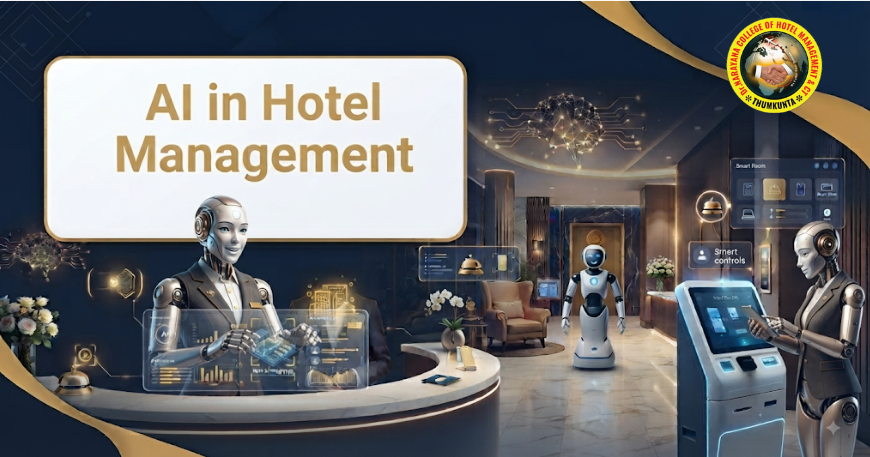
Walk into almost any leading hotel today, and you’ll notice something different from a decade ago. Check-ins are quicker, room recommendations feel oddly accurate, and guest complaints seem to get resolved before they even escalate. Behind this shift lies one common driver: AI in Hotel Management. Digital Transformation internship for Hospitality. What was once a buzzword confined to tech conferences has now become an operational backbone for hotels aiming to stay competitive, efficient, and guest-focused.
At Dr Narayana College, we work with hospitality businesses that want more than just automation for the sake of it-they want technology that genuinely improves guest experience while making day-to-day operations easier to manage. This article breaks down how Artificial Intelligence is reshaping the hotel industry and why properties that adopt it early are pulling ahead of the competition.
Understanding the Role of AI in Modern Hotel Operations
At its core, AI in Hotel Management is about using smart software and data analysis to handle tasks that once required constant human oversight-without losing the personal touch guests expect from good hospitality. This includes everything from predicting how many rooms will be booked next weekend to instantly answering a guest’s question about late checkout at 2 a.m.
Unlike older property management systems that simply record data, Intelligent Hotel Management Software actively interprets that data to suggest actions-flagging a maintenance issue before it becomes a guest complaint, or recommending a room upgrade based on a guest’s past stays. Hotels exploring this shift often start by reviewing,which outlines a practical starting point for integrating smart systems into existing operations.
Where AI Makes the Biggest Difference
Personalized Guest Journeys From Booking to Checkout
Guests today expect hotels to “know” them a little-remembering their pillow preference, their favorite breakfast spot, or the fact that they always book a late checkout. AI makes this level of Guest Personalization Technology achievable at scale. By analyzing booking history, loyalty program data, and even social media signals, AI systems can tailor offers and communications to each guest automatically.
Chat-based virtual assistants extend this personalization around the clock, answering questions, processing service requests, and resolving minor issues without requiring a guest to call the front desk. The result is faster service and fewer frustrated guests waiting on hold.
Dynamic, Data-Backed Pricing Decisions
Setting the right room rate on any given night involves juggling dozens of variables-local events, weather, competitor pricing, historical demand, and booking pace. AI-Based Revenue Management takes this complexity and turns it into real-time pricing recommendations, adjusting rates automatically as conditions change.
This isn’t just about charging more during peak periods. It’s about protecting occupancy during slow seasons too, using predictive models to identify the sweet spot between filling rooms and maximizing revenue per available room (RevPAR). Properties interested in refining their pricing strategy can learn more through our Hotel Revenue Strategy Services.
Streamlined Operations Behind the Scenes
While guests notice the front-facing improvements, some of the most valuable AI applications happen out of sight. Predictive Maintenance Systems monitor equipment-HVAC units, elevators, kitchen appliances-and alert staff to potential failures before they disrupt operations. Housekeeping schedules can be optimized based on real-time occupancy data, reducing wasted labor hours and ensuring rooms are ready exactly when needed.
Energy management is another area seeing major gains, with AI systems adjusting lighting, heating, and cooling based on occupancy patterns-cutting costs while supporting sustainability goals that increasingly matter to eco-conscious travelers.
Listening to Guests at Scale
Every review, survey response, and social media comment carries information about what a hotel is doing right or wrong. Manually tracking this feedback across hundreds of reviews is nearly impossible, but AI Sentiment Analysis Tools can scan this data continuously, identifying patterns-like recurring complaints about slow Wi-Fi or repeated praise for a particular staff member.
This gives hotel managers the ability to act on feedback in near real-time, rather than discovering a pattern of dissatisfaction months later during a quarterly review.
The Business Case for Adopting AI Now
Hotels weighing whether to invest in AI often ask a simple question: is it worth the cost? The answer, increasingly, is yes-for several reasons:
- Lower Operational Costs: Automation reduces the manual workload on staff, allowing teams to focus on high-impact guest interactions instead of repetitive administrative tasks.
- Better Guest Retention: Personalized service builds loyalty, and loyal guests are more profitable than one-time visitors.
- Smarter Forecasting: Predictive analytics help hotels anticipate demand shifts instead of reacting to them after the fact.
- Stronger Market Position: Hotels using AI effectively differentiate themselves in a crowded, review-driven marketplace.
For a closer look at how these benefits apply to properties of different sizes, our Smart Property Management Consulting page walks through real-world implementation scenarios.
Common Concerns About AI Adoption-and How to Address Them
It’s natural for hotel owners to have reservations about implementing new technology. Concerns around cost, staff training, and data security are valid and worth addressing directly rather than glossing over.
The good news is that AI adoption doesn’t need to happen all at once. A phased approach-starting with one high-impact area like guest communication or revenue management-allows hotels to see measurable results before expanding further. Data security, meanwhile, should always be a non-negotiable part of any AI vendor selection process, with clear protocols around guest information handling and compliance.
At Dr Narayana College, we guide hotels through this process step by step, ensuring technology adoption fits the property’s size, budget, and guest profile rather than forcing a one-size-fits-all solution.
What's Next for AI in Hospitality
The next wave of AI in Hotel Management is already taking shape-voice-activated in-room assistants, robotic delivery for room service, biometric check-in systems, and hyper-targeted marketing that reaches guests with the right offer at exactly the right moment. Hotels that build a strong AI foundation today will be far better positioned to adopt these next-generation tools as they mature.
More than just a technology trend, this shift represents a fundamental change in how hospitality businesses think about guest relationships-less reactive, more anticipatory, and increasingly personal despite being powered by machines.
Ready to Bring AI Into Your Hotel Operations?
Technology should make hospitality easier, not more complicated. At Dr NarayanaCollege, we help hotels implement AI in Hotel Management in a way that’s practical, guest-focused, and built around your property’s real needs-not just the latest trend.
Conclusion
Contact Us Dr NarayanaCollege, today to talk through where your hotel stands now and what a smart, phased AI roadmap could look like for your team. Let’s make your operations sharper and your guest experience unforgettable
FAQs
AI in Hotel Management uses smart software to automate check-ins, personalize guest service, and streamline daily hotel operations efficiently.
Yes, AI in Hotel Management analyzes demand, events, and competitor rates to recommend optimal pricing and boost overall hotel revenue.
Absolutely, AI in Hotel Management personalised recommendations, speeds up service, and resolves guest queries instantly, anytime.
AI in Hotel Management uses predictive analytics to flag equipment problems early, reducing downtime and unexpected repair costs.
Not necessarily, AI in Hotel Management can be adopted in phases, letting smaller properties scale costs alongside measurable results.
Keywords
- AI-Powered Guest Experience
- Hotel Automation Technology
- AI-Based Revenue Management
- Predictive Maintenance
- Smart Hotel Technology
- AI Chatbots for Hotels
- Guest Personalization
- Dynamic Pricing
- Hotel Data Analytics
- AI Hotel Software
Recent Posts
-
How AI Is Shaping Tourism and Hospitality Education in Hyderabad
-
How AI Is Changing Hotel Management Education
-
Which Course is Better for Hotel Management?
-
Top 5 Hotel Management Colleges in Hyderabad
-
Life of a Hotel Management Student
-
Hospitality Jobs on Cruise Ships
-
How to Get Campus Placement in Hotel Management